Precision is all in the present-day manufacturing. Be it automotive parts, industrial equipment or the production of intricate tools, even the tiniest deviation can result in poor-quality products, extended wear/tear, and undue delays in the production process. Although sometimes much focus is directed to the big machines, it is the small parts that operate behind the scenes that make everything work in tandem. These essential items include dowel pins and guide pins, which are essential in the process of product manufacturing in terms of the alignment and consistency.
Although they may appear like a trivial aspect, such high-precision parts play a vital role in promoting high quality products, efficiency in operations, and the amount of time the equipment will last.
What Are Dowel Pins?
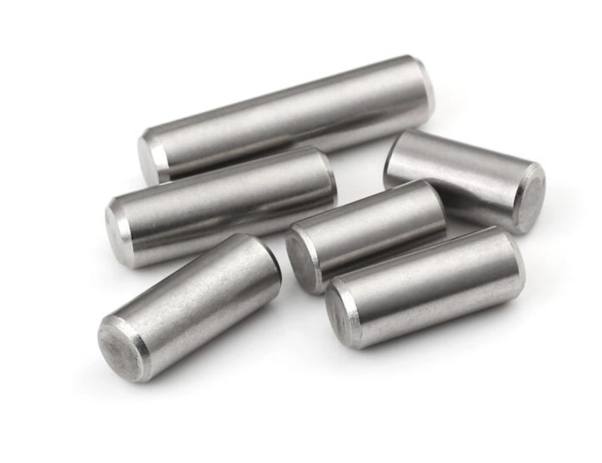
Dowel pins are cylindrically shaped fastening items that are used to precisely position two or more machine parts. Dowel pins are not used to hold components together like screws or bolts but rather made under very tight tolerances so that the pins are placed accurately. This makes it possible to have machinery, fixtures, moulds, and dies back at the exact position each time they are put together.
As per the American Society of Mechanical Engineers (ASME), product quality, equipment reliability and interchangeability in the engineering applications are all dependent on the precision tolerances and standardised mechanical components.
Where Are Dowel Pins Used?
Dowel pins have a large scope of industrial uses. They are versatile and can be used in heavy-duty machinery as well as precision machinery.
Some common applications include:
- Injection moulds
- Die sets
- Machine fixtures
- Industrial equipment
- Assembly jigs
- Automotive manufacturing
- Aerospace components
Understanding the Purpose of Guide Pins
While dowel pins offer constant positioning, guide pins are formulated to direct traveling components. They make sure that the machine parts move in an appropriate path, which is controlled and with less friction and without unnecessary wear.
Guide pins are especially critical in injection molding, stamping dies and automated production systems where repetitive movement has to be consistent after thousands of production cycles.
Benefits of Using Precision Guide Pins
Selecting high-quality guide pins offers several long-term advantages for manufacturers.
Improved Accuracy
Guide pins ensure that moving parts are in the correct position, which assists in creating products that are of high quality and consistent.
Reduced Equipment Wear
Having the right guidance also reduces friction among parts thus saving maintenance and increasing tool life.
Better Production Efficiency
Accurate movement reduces the number of interruptions in production, enabling manufacturing lines to be more effective.
Lower Maintenance Costs
Since guide pins avoid undue tension on machinery, companies are likely to save on repair costs and have better service of costly machinery.
The National Institute of Standards and Technology (NIST) states that precision engineering and dimensional accuracy are key factors in reducing manufacturing defects, improving quality, and increasing production efficiency across modern industries.
Dowel pins and guide pins are not very big components, but their importance in manufacturing should not be disregarded. They provide the precision, reliability and regulated movement needed to create effectively in numerous industries. Well-designed components delivering a combination of precision and durability can help manufacturers improve the quality of products they create, their life cycle, and allow them to maintain easy, reliable operation down the line.