The mistake usually shows up after installation. A homeowner picks a striking fountain design, arranges the purchase, and only then starts thinking about the pump. By that point, choices narrow fast. The spray head is fixed, the basin depth is set, and the pump has to work around a design it was never part of shaping.
When the Cart Comes Before the Horse
The Real Cost of Choosing Last: The right pond fountains for sale deliver matched spray performance, reliable water projection, and display quality that holds up across seasons when pump and fountain are selected as a complete system from the start. That pairing is what separates a water feature that impresses year after year from one that disappoints within weeks.
Built to Match, Not to Compensate: The best pumps for fountain systems are engineered to sustain the pressure and flow each display style demands, giving any outdoor water feature the consistent output it needs through every operating season. Choosing the right unit means the display runs properly from day one, rather than struggling against a nozzle configuration it was never sized to serve.
Reading the Numbers Before the Nozzle
Where Material Choices Shape Long-Term Performance: When sizing pump to fountain, material selection across both components carries more weight than most buyers anticipate. Housings exposed to outdoor conditions degrade quickly when materials are mismatched to the pond’s chemical profile. A unit built for soft water corrodes faster in a mineral-heavy environment, and that shortens the system’s working life considerably.
Why Basin Design Cannot Be an Afterthought: The structural integrity of a fountain basin determines how well the system holds pressure during operation. A shallow or lightweight basin can flex under continuous water movement, shifting fittings and altering nozzle angle over time. Choosing a fountain and pump together means both components get assessed against the same operational load from the planning stage.
Numbers That Decide the Outcome
Why Head Pressure and Flow Rate Decide Everything: Head pressure sets the ceiling on how high a pump can push water against gravity. That figure must exceed the desired spray height, with margin left for friction loss through fittings. Most nozzle designs carry a minimum flow rate requirement tied to gallons per hour, and missing that number means the display never performs as shown.
Checking the Right Variables Before Purchasing: Buyers who confirm pump specifications alongside fountain dimensions before committing tend to avoid the most common post-installation frustrations. Mismatched systems are not always obvious at the point of purchase, and the gap usually shows up once the feature is running. These are the variables worth locking in before any final purchase decision is made:
- Spray height is calculated against pump head pressure before purchasing.
- Basin volume is confirmed against the pump’s total flow capacity.
- Nozzle complexity is matched to the pump’s rated gallons-per-hour output.
- Energy draw is verified against the power supply at the installation site.
- Seasonal use expectations are factored into pump duty cycle ratings.
The Display You Imagined Can Actually Exist
Selecting a fountain and its pump as a matched pair turns a good-looking product into a well-functioning feature. The gap between a display that performs and one that disappoints usually comes down to whether those specifications were checked before or after the purchase. Browse complete fountain and pump pairings to make sure your feature performs exactly the way you planned.
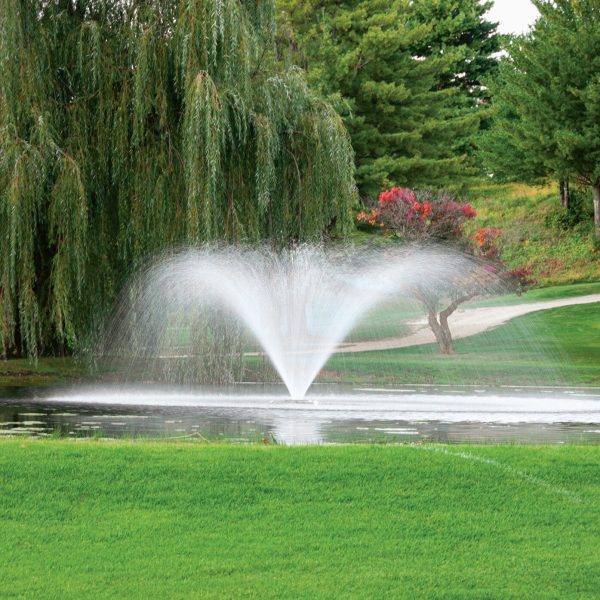
Featured Image Source: https://www.fountaintechpumps.com/wp-content/uploads/2024/11/Kasco-VFX-5HP_2-600×600.jpg