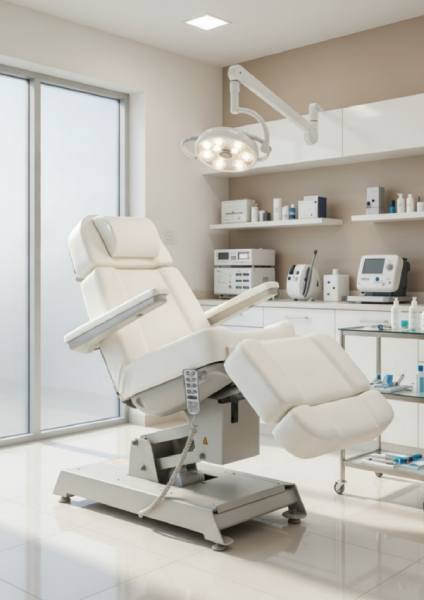
Price lists make comparison look simple. Two chairs, two figures, pick the lower one. That logic collapses the moment the specification sheets come out. A derma chair price reflects motor count, frame gauge, upholstery grade and the controls fitted as standard, so the cheaper quote is not automatically the better buy for a working dermatology clinic.
Where Two Similar Quotes Hide Very Different Machines
Specification Gaps Hidden inside a Single Figure: The derma chair price worth paying covers four motor movement, programmable positions and electronic tilt, and those features can add value across laser, biopsy and filler work. Read the adjustment range first. Then check what the seller has left out of the standard package, because accessories are where quotes drift apart.
Why Treatment Overlap Shapes the Shortlist: Plenty of dermatology centres run intravenous drips, PRP sessions and minor excisions in the same room. An IV infusion recliner gives those clinics a seated position with electronic height and backrest control, which can be useful for longer cannulation and drip cycles. Comparing that against a derma chair clarifies which quote better matches your case mix.
Motors, Frames and the Parts Buyers Skip
Motor Count and Frame Build Matter for Long-Term Use: Count the motors before anything else. A four motor chair moves height, backrest, leg rest and tilt independently, while other units may combine two movements onto one actuator. That independence can provide greater flexibility when positioning a patient for procedures such as excisions and biopsies, and precision welded steel frames are an important consideration for chairs used through repeated daily adjustment.
Upholstery Built for Daily Cleaning: Skin clinics wipe surfaces down between every patient, sometimes many times across a shift. Upholstery specified for disinfectant contact, with UV and abrasion resistance where applicable, can be an important consideration for regular clinical use. Sound aseptic technique depends on appropriate cleaning and infection-control procedures, so material grade deserves a line of its own on the comparison sheet.
Hydraulic or Electric and What Each One Really Costs
Manual Lift Systems and Where They Still Work: Hydraulic models can sit lower on the quote and need no power point, which suits a small clinic running cryotherapy and short consultations. Foot pumping between patients adds a manual adjustment step across a busy list, though. That difference is one reason to compare the adjustment requirements and operating routine before deciding on a derma chair price.
Electric Adjustment for Longer Procedure Lists: Motorised height and tilt let the practitioner reposition a patient without manually adjusting the mechanism. Trendelenburg tilt may also be a required feature for certain clinical applications, so the suitability of the positioning range should be checked against the clinic’s procedures and the manufacturer’s specifications. Clinics running an IV infusion recliner alongside derma seating can also consider whether common control functions make the equipment easier to operate within their workflow.
Quick checks worth running before the numbers go side by side:
● Motor count, and which specific movement each motor controls
● Frame gauge and stated weight capacity, in writing
● Upholstery specification, not just the colour chart
● Handset type. Programmable memory or basic up and down
● Accessories included as standard, such as stools, armrests and paper roll holders
● Warranty length and how far the service network reaches
Turning a Quote into a Confident Purchase
Specification sheets take longer to read than price tags, and that reading can make the comparison more useful. Ask every supplier for motor counts, frame details and warranty terms in writing before you compare figures. Request a full technical breakdown for each model on your shortlist, then buy on evidence rather than guesswork.