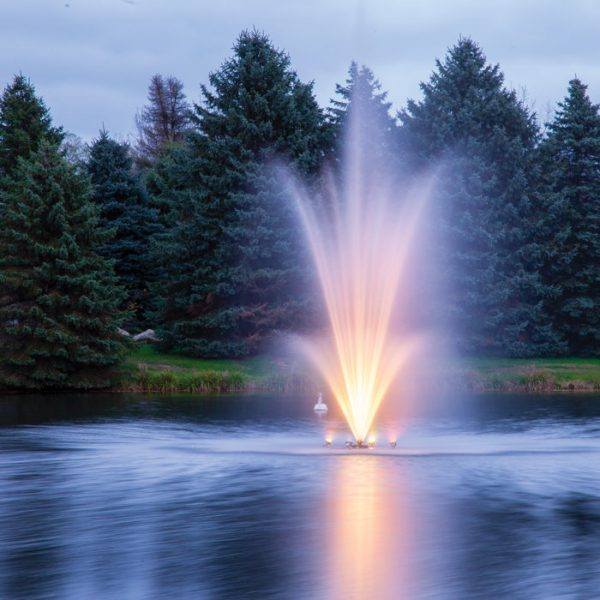
Water features sell themselves on looks. A tall plume catches the eye of the beholder from across a yard, and that is where most shopping stops. Choosing a fountain for pond use asks for a closer reading of the specs, because the pattern above the surface says little about what happens below it. The hidden half of the job runs quietly, all season.
What Separates a Showpiece from a Workhorse
Reading Power Claims with a Sharper Eye: A properly sized fountain for pond projects pushes a strong net flow rate into the air, and that moving volume is what drives aeration. Horsepower on a label can be misleading. Some discount units advertise one horsepower while the pump itself delivers closer to a third of that output.
Where Nightfall Changes the View: Quality fountain lights extend the display well past sunset, turning a daytime feature into an evening focal point that carries a patio or a commercial frontage. Beam angle and color temperature shape that effect more than raw brightness does. Warmer tones read softer against stone. Cooler tones make spray look crisp.
Aeration Is the Quiet Half of the Job
What Moving Water Does for Fish and Plants: Every gallon lifted and dropped back feeds oxygen into the upper layer, which supports fish through warm nights when levels drop. Good water garden design treats that circulation as structural, not decorative. Stagnant water invites algae. Chemicals do less work when the pump does more. Property managers notice the difference by midsummer, usually in clarity first.
Sizing against Surface Area and Depth: Pond acreage sets the baseline, though depth and shape pull the number around. A fountain for pond sites with deep pockets or long, narrow arms sometimes needs a second unit rather than one oversized pump straining at the center. One pump rarely covers everything evenly. Layout beats raw power here.
Lighting Built to Survive the Pond
Fixtures Built for Constant Submersion: Sealed housings hold up to year round immersion far better than landscape lighting fixtures pulled off a garden bed and dropped into the water. Cheap seals fail first at the cable gland. Replacing a whole ring costs more than buying right once. Warranty terms give a rough read on build quality.
Matching Color to the Setting: White fountain lights suit formal grounds and hotel entrances, while amber sits easier in a wooded garden. Color changing sets look striking in marketing photos, though most owners settle on one tone after a few weeks and leave it there. Restraint reads better than a full spectrum cycling all night.
Questions Buyers Skip and Later Regret
Numbers Worth Pulling before Checkout: Sales pages rarely list everything a buyer needs. Getting the actual numbers takes a few minutes and prevents a return shipment. Most disappointment traces back to a spec that was skipped rather than a product that failed outright. Ask before the box ships, not after.
- Net flow rate in gallons per minute, not the horsepower badge on the box.
- Spray height measured at the pond’s actual water depth.
- Cable length. Short cords force awkward placement.
- Whether the lighting kit ships with the unit or costs extra later.
- Seal ratings on every submerged connection.
- Winter storage requirements for cold climate sites.
Water Working as Hard as It Looks
A pond that stays clear and holds fish through August owes more to steady circulation than to spray height. Compare flow figures side by side before anything else. Check what the lighting kit actually includes. Then pick the unit built for the water it will sit in, and start that comparison now.